Nearly 80 percent of british companies agree that strong brand guidelines are vital for maintaining their business identity across all platforms. In a crowded market, consistency is what sets a brand apart and builds trust with customers. Understanding how these guidelines shape everything from logo use to tone of voice will help you communicate with clarity and professionalism, no matter the size or style of your team.
Table of Contents
- Defining Brand Guidelines And Their Purpose
- Core Elements Included In Brand Guidelines
- How Brand Guidelines Support UK Businesses
- Common Pitfalls When Creating Guidelines
- Best Practices For Effective Brand Guidelines
Key Takeaways
| Point | Details |
|---|---|
| Brand Guidelines Define Identity | They establish a cohesive visual and verbal framework for consistent communication across all media. |
| Importance for UK Businesses | They differentiate brands in a competitive market, enhancing credibility and building customer trust. |
| Common Pitfalls to Avoid | Businesses should avoid ambiguity, over-complication, and infrequency in updates to ensure guidelines are usable and relevant. |
| Best Practices for Development | Involving stakeholders and maintaining flexibility are vital for creating practical and effective brand guidelines. |
Defining Brand Guidelines And Their Purpose
Brand guidelines are the blueprint for maintaining a cohesive and recognisable business identity. According to interaction-design, these comprehensive documents define how a brand should be presented across various media, ensuring consistency in visual and verbal communication.
At their core, brand guidelines serve as a strategic framework that covers critical elements like logo usage, colour schemes, typography, and tone of voice. They act as an essential reference point for anyone creating content representing the organisation, whether internal team members or external partners. By establishing clear parameters, businesses can create a unified visual and communicative approach that resonates with their target audience.
The purpose of brand guidelines extends far beyond aesthetic consistency. As blog.marcomsociety highlights, these documents help organisations present a cohesive image that fosters trust and recognition. When executed effectively, brand guidelines can transform disparate marketing materials into a powerful, unified communication strategy.
Key components of robust brand guidelines typically include:
- Visual Identity: Precise logo specifications, colour palette, typography rules
- Tone of Voice: Communication style, language preferences, messaging principles
- Usage Instructions: How brand assets can and cannot be used across different platforms
- Design Principles: Overarching creative philosophy that guides visual representation
By investing time in developing comprehensive brand guidelines, businesses create a strategic asset that protects their brand’s integrity and supports long-term marketing effectiveness.
Core Elements Included In Brand Guidelines
Brand guidelines are a comprehensive toolkit that ensures consistent communication across all business platforms. According to interaction-design, these guidelines typically encompass key components that define a brand’s visual and communicative identity.
Logo Usage stands as the cornerstone of brand guidelines. This includes precise specifications about how the logo can be displayed, including minimum sizes, clear space requirements, colour variations, and prohibited modifications. A well-defined logo protocol prevents misrepresentation and maintains visual integrity across different media channels.
Colour palette and typography represent another critical element of brand guidelines. blog.marcomsociety highlights that these visual elements create a recognisable and consistent brand experience. The colour palette defines exact hex codes, pantone references, and acceptable colour combinations, while typography guidelines specify approved fonts, text weights, and styling rules.
Key components of comprehensive brand guidelines include:
- Visual Identity: Logo specifications, colour palette, design principles
- Typography: Font families, text sizes, styling guidelines
- Imagery Standards: Photography style, graphic design approach
- Tone of Voice: Communication style, language preferences
- Application Guidelines: How brand elements can be used across different platforms
By meticulously documenting these elements, organisations create a strategic framework that ensures every piece of communication reinforces their unique brand personality and maintains professional consistency.

How Brand Guidelines Support UK Businesses
UK businesses face intense market competition, making brand consistency more crucial than ever. According to interaction-design, brand guidelines are essential in establishing a professional image that helps businesses differentiate themselves in a crowded marketplace.
For small and medium enterprises across the United Kingdom, brand guidelines provide a strategic framework for professional communication. They ensure that every marketing material, social media post, and customer interaction reflects the organisation’s core values and visual identity. This consistency builds credibility and helps businesses create a memorable presence that stands out from competitors.
blog.marcomsociety highlights that these guidelines support UK businesses by offering a clear roadmap for all branding efforts. This systematic approach enhances brand recognition and provides multiple strategic advantages.
Key ways brand guidelines support UK businesses include:
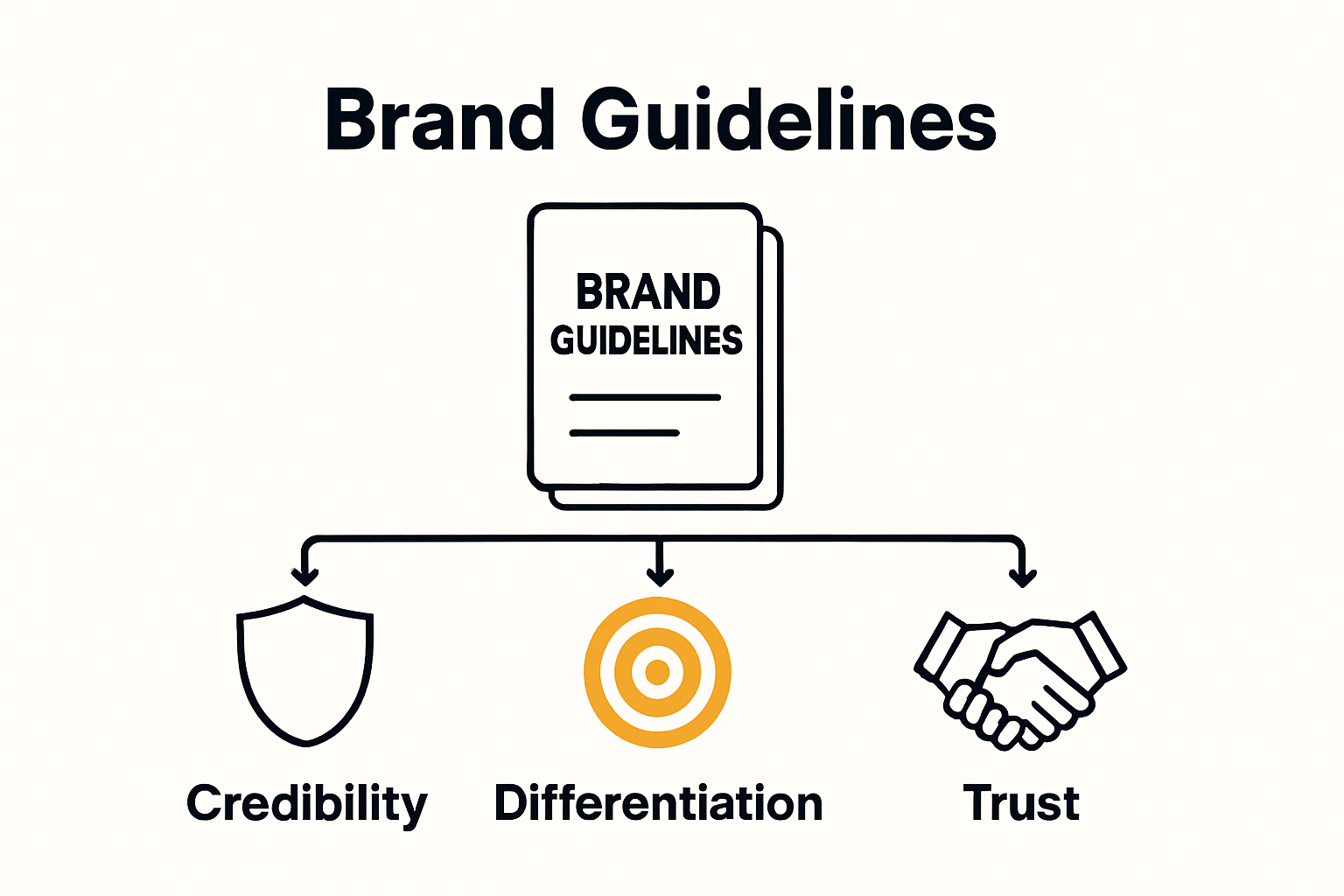
- Market Differentiation: Creating a unique visual and communicative identity
- Professional Credibility: Ensuring consistent, high-quality communications
- Cost Efficiency: Reducing design and marketing complexity
- Team Alignment: Providing clear instructions for internal and external stakeholders
- Customer Trust: Building recognition through consistent brand presentation
By investing in comprehensive brand guidelines, UK businesses can transform their communication strategy from fragmented to focused, ultimately driving stronger connections with their target audience.
Common Pitfalls When Creating Guidelines
Creating effective brand guidelines requires careful planning and strategic thinking. According to blog.marcomsociety, businesses frequently encounter common pitfalls that can undermine the entire branding process, including lack of clarity, inconsistency, and unnecessary complexity.
One significant challenge is over-complicating the guidelines. Many organisations create intricate documents so detailed that they become difficult for team members to navigate and implement. interaction-design emphasises that guidelines should be adaptable and clear, striking a balance between comprehensive instructions and practical usability.
The most critical mistakes businesses make when developing brand guidelines often stem from inflexibility and poor communication. Teams might create rigid frameworks that cannot adapt to evolving business needs or fail to provide sufficient context for why certain branding rules exist. This approach can lead to confusion and decreased team engagement with the guidelines.
Key pitfalls to avoid include:
- Ambiguous Language: Using unclear or interpretative instructions
- Lack of Practical Examples: Failing to demonstrate correct implementation
- Infrequent Updates: Not reviewing guidelines to reflect current brand strategy
- Overcomplicated Design Rules: Creating unnecessarily complex visual restrictions
- Ignoring Stakeholder Input: Developing guidelines without team consultation
By understanding and proactively addressing these common challenges, businesses can develop brand guidelines that are both comprehensive and genuinely useful for their entire organisation.
Best Practices For Effective Brand Guidelines
Crafting exceptional brand guidelines requires a strategic and collaborative approach. According to interaction-design, the most successful guidelines are both comprehensive and flexible, providing clear instructions while allowing room for creative interpretation.
Stakeholder involvement emerges as a critical best practice in developing brand guidelines. blog.marcomsociety emphasises the importance of engaging key team members across different departments during the development process. This inclusive approach ensures that guidelines are practical, understood, and enthusiastically adopted throughout the organisation.
Regular review and updating of brand guidelines is another crucial strategy. As businesses evolve, their visual identity and communication strategies must adapt. This means creating a living document that can be refined periodically, ensuring the guidelines remain relevant and aligned with the organisation’s current objectives and market positioning.
Key best practices for creating effective brand guidelines include:
- Collaborative Development: Involve representatives from multiple departments
- Clear Documentation: Use straightforward, jargon-free language
- Visual Examples: Provide real-world implementation demonstrations
- Flexible Framework: Allow creative interpretation within defined boundaries
- Ongoing Training: Regularly educate team members about guideline usage
By implementing these strategic approaches, organisations can develop brand guidelines that are not just a reference document, but a dynamic tool for maintaining consistent and compelling brand communication.
Strengthen Your Brand With Clear Guidelines and Expert Design Support
Building consistent brand guidelines is a crucial step to avoid confusion and foster trust among your audience. This article highlights common challenges such as over-complication and unclear instructions that can weaken your brand identity. If you find yourself struggling to create a flexible yet comprehensive framework that your whole team can embrace, you are not alone.
At Kuko Creative, we have spent over a decade helping business owners like you bring their brand vision to life through impactful designs that ensure consistency and recognition. Our expert team specialises in developing logos, colour schemes, and visual elements perfectly aligned with your brand guidelines to build a unified and professional image.
Are you ready to transform your branding strategy and create materials that truly connect with the people who matter most Explore Our Services today.
Take the next step now by partnering with Kuko Creative for brand designs that provide clarity and inspire confidence. Visit Kuko Creative to learn more and start your journey toward effortless brand consistency.
Frequently Asked Questions
What are brand guidelines?
Brand guidelines are comprehensive documents that outline how a brand should be presented across various media. They include specifications for logo usage, colour schemes, typography, and tone of voice to ensure consistent visual and verbal communication.
Why are brand guidelines important for businesses?
Brand guidelines help maintain a cohesive brand image, build trust and recognition among consumers, and differentiate businesses from their competitors. They also provide a reference point for team members and partners to ensure consistent branding across all platforms.
What key components should be included in brand guidelines?
Key components typically include visual identity elements like logo specifications and colour palettes, typography rules, tone of voice for communication, usage instructions for brand assets, and overarching design principles to guide visual representation.
How can effective brand guidelines support marketing efforts?
Effective brand guidelines promote market differentiation, enhance professional credibility, provide cost efficiency in marketing, align team efforts, and build customer trust through consistent brand presentation.