Every Leeds business owner faces the challenge of standing out in a crowded market without losing what makes their brand unique. Understanding the meaning and power of sub-brands is vital because it brings targeted reach and a fresh identity to specific customer groups while preserving your main brand’s reputation. This guide explains sub-brand strategies that can drive brand cohesion, market differentiation, and long-term growth so you can build stronger connections with your ideal customers.
Table of Contents
- Sub-Brand Meaning And Core Concepts
- Types Of Sub-Brands And Their Purposes
- How Sub-Brands Strengthen Market Presence
- Requirements And Legal Factors In The UK
- Common Sub-Brand Pitfalls For Businesses
Key Takeaways
| Point | Details |
|---|---|
| Sub-brands enhance targeted marketing | They allow businesses to tailor their offerings to specific market segments while maintaining a connection to the parent brand. |
| Market research is essential | Before launching a sub-brand, organisations must ensure it meets an unmet consumer need and aligns with core brand values. |
| Legal considerations are crucial | Businesses must navigate trademark registration and compliance to avoid legal disputes and protect their brand. |
| Avoid common pitfalls | Companies should ensure meaningful differentiation and maintain alignment between sub-brands and the parent brand to prevent customer confusion. |
Sub-Brand Meaning and Core Concepts
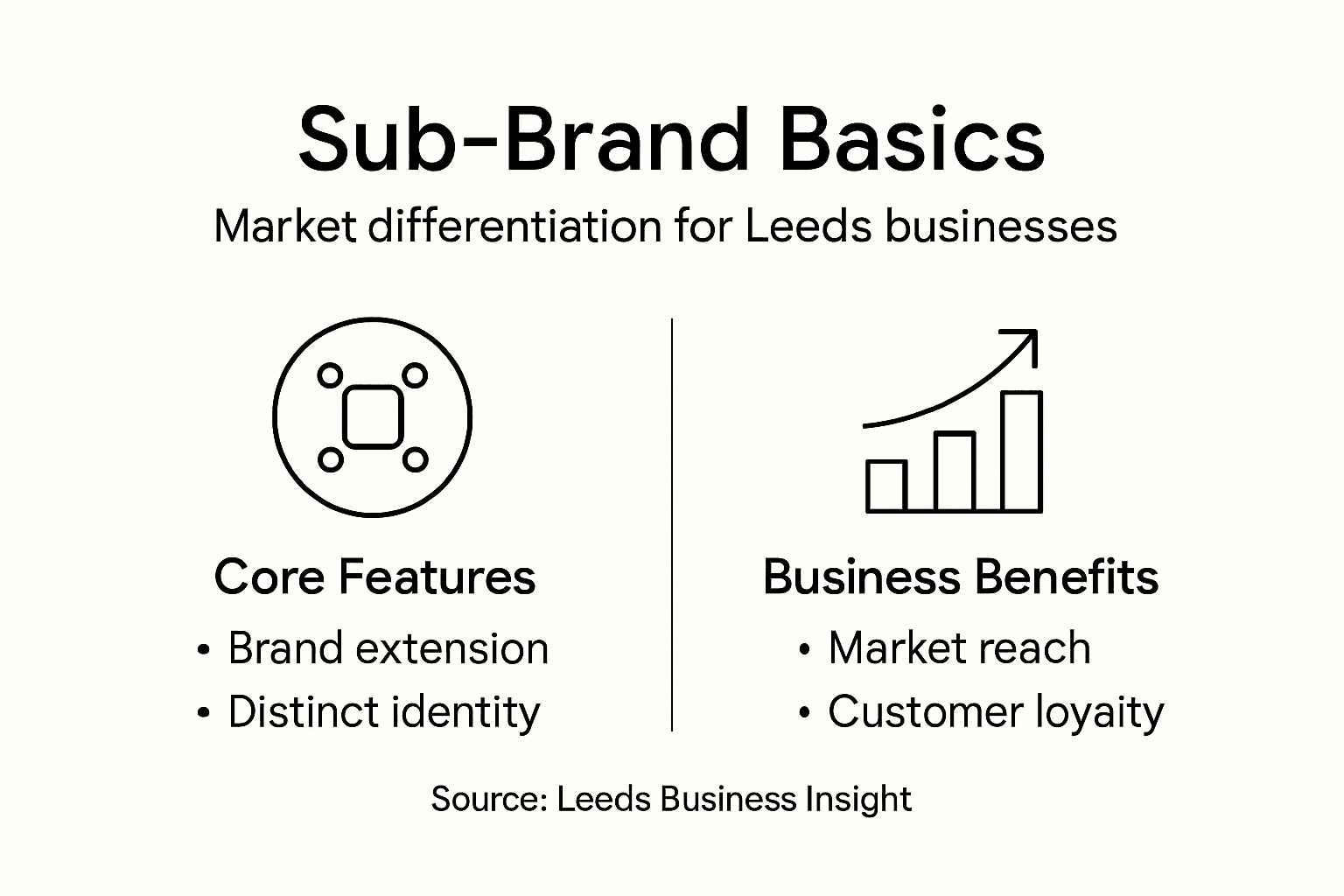
A sub-brand represents a strategic extension of a primary brand, designed to target specific market segments while maintaining a connection to the parent brand’s core identity. Sub-brands offer precise audience targeting by creating unique positioning that resonates with particular consumer groups.
The core characteristics of sub-brands include:
- Distinct visual and messaging identity
- Shared foundational elements with parent brand
- Targeted approach to specific market niches
- Independent yet interconnected brand personality
- Ability to expand brand reach without diluting core brand values
Sub-brands function as strategic tools for businesses seeking nuanced market engagement. By developing a subsidiary brand with its own personality, companies can explore new market segments, demographic groups, or product categories while leveraging the established trust and recognition of their primary brand.
For Leeds businesses, sub-branding represents a sophisticated approach to market differentiation. Rather than creating entirely new brand identities, organisations can strategically develop sub-brands that speak directly to specific customer needs while maintaining a cohesive overarching brand strategy.
Pro tip: Before launching a sub-brand, conduct thorough market research to ensure it genuinely addresses an unmet consumer need and aligns with your parent brand’s core values.
Types of Sub-Brands and Their Purposes
Sub-brands emerge in various strategic configurations, each designed to achieve specific business objectives. Brand architecture models reveal distinct sub-brand approaches that help organisations expand their market presence effectively.
The primary types of sub-brands include:
- Masterbrand as Driver sub-brands, where the parent brand maintains dominant visual and messaging control
- Co-driver sub-brands, featuring more balanced representation between parent and subsidiary brands
- Niche targeting sub-brands, specifically created to engage unique market segments
- Experimental sub-brands, used to test new market opportunities with minimal risk to the core brand
- Luxury or premium tier sub-brands that extend the parent brand’s perceived value
For Leeds businesses, understanding these sub-brand typologies can unlock sophisticated market positioning strategies. By carefully selecting the appropriate sub-brand approach, companies can effectively communicate with different customer groups while maintaining a cohesive brand identity.
The strategic deployment of sub-brands allows organisations to explore market segments without completely reinventing their brand. This approach provides flexibility, enabling businesses to adapt to changing consumer preferences and emerging market opportunities without compromising their established brand equity.
Below is a comparison of common sub-brand types and their ideal strategic applications:
| Sub-Brand Type | Ideal Use Case | Example Benefit |
|---|---|---|
| Masterbrand as Driver | Retain strong parent brand influence | Maintains brand trust while expanding |
| Co-driver | Blend parent and sub-brand strengths | Enables mutual credibility enhancement |
| Niche Targeting | Reach specific or underserved market | Deepens engagement with certain groups |
| Experimental | Explore new concepts with reduced risk | Limits damage if new idea fails |
| Luxury/Premium Tier | Elevate overall brand perception | Attracts higher-value customers |
Pro tip: Conduct comprehensive market research and audience analysis before developing a sub-brand to ensure it genuinely addresses an unmet consumer need and aligns with your overall brand strategy.
How Sub-Brands Strengthen Market Presence
Sub-brand strategies offer powerful mechanisms for businesses to expand their market footprint without compromising their core brand identity. These strategic extensions enable organisations to innovate, target diverse customer segments, and create more personalised marketing approaches.
Key mechanisms through which sub-brands strengthen market presence include:
- Market segmentation that allows precise targeting of specific customer groups
- Innovation platforms enabling experimentation with new product concepts
- Risk mitigation by testing market responses without endangering the primary brand
- Flexible brand positioning that adapts to evolving consumer preferences
- Enhanced brand portfolio development that increases overall market reach
For Leeds businesses, sub-branding represents a sophisticated approach to market expansion. By carefully crafting sub-brands that complement their primary brand, organisations can explore new market opportunities while maintaining the trust and recognition established by their core brand identity.

The strategic deployment of sub-brands provides businesses with remarkable flexibility in responding to market dynamics. Companies can create targeted brand experiences that speak directly to specific consumer needs, ultimately driving growth and deepening customer engagement across multiple market segments.
Pro tip: Develop a clear brand governance framework that ensures your sub-brands maintain consistent quality and alignment with your overarching brand strategy.
Requirements and Legal Factors in the UK
Trade mark registration offers critical legal protections for businesses developing sub-brands in the United Kingdom. The complex legal landscape requires careful navigation to ensure comprehensive brand protection and prevent potential intellectual property disputes.
Key legal considerations for sub-brand development include:
- Trademark registration with the UK Intellectual Property Office
- Comprehensive search of existing trade mark databases
- Precise specification of goods and services categories
- Understanding territorial limitations of trademark protection
- Compliance with UK intellectual property regulations
- Maintaining active trademark renewals every 10 years
The legal framework surrounding sub-brands demands meticulous attention to detail. Businesses must conduct thorough investigations to ensure their proposed sub-brand does not infringe upon existing trademarks, which could result in costly legal challenges and potential brand reputation damage.
For Leeds businesses, understanding these legal nuances is crucial. The UK’s robust intellectual property system provides strong protections, but also requires precise documentation and strategic brand management. Sub-brands must be carefully crafted to meet both legal requirements and market positioning objectives.
Pro tip: Consult an intellectual property solicitor specialising in trademark law to conduct a comprehensive brand clearance search before finalising your sub-brand identity.
Common Sub-Brand Pitfalls for Businesses
Corporate rebranding challenges can undermine strategic efforts if businesses fail to understand the complex dynamics of sub-brand development. Many organisations inadvertently create barriers to successful brand extension by overlooking critical strategic considerations.
Common sub-brand pitfalls include:
- Brand value disconnection that weakens core brand identity
- Superficial differentiation without meaningful strategic purpose
- Stakeholder perspective neglect leading to internal misalignment
- Inconsistent communication across brand touchpoints
- Overcomplication of brand architecture that confuses target audiences
Leeds businesses must recognise that sub-brand development requires more than cosmetic changes. Successful implementation demands a holistic approach that carefully balances innovation with brand cohesion, ensuring each sub-brand genuinely adds value to the overall brand ecosystem.
The most critical error businesses make is treating sub-brands as isolated marketing experiments. Instead, sub-brands should be integrated strategic assets that complement and extend the parent brand’s core values, creating a unified yet flexible brand portfolio that resonates with diverse customer segments.
This quick-view table outlines typical sub-brand pitfalls and recommended solutions:
| Pitfall | Potential Impact | Recommended Solution |
|---|---|---|
| Weak core brand linkage | Customer confusion, reduced loyalty | Strengthen parent-sub-brand connection |
| Poor internal alignment | Missed implementation goals | Engage all key stakeholders early |
| Overly complex architecture | Customer disengagement | Simplify brand structure and messaging |
| Superficial differentiation | Diluted market positioning | Ensure meaningful value proposition |
| Inconsistent messaging | Brand reputation erosion | Implement robust brand governance |
Pro tip: Conduct comprehensive stakeholder consultations and develop a clear brand governance framework before launching any sub-brand initiative.
Strengthen Your Leeds Business with Strategic Sub-Branding
Understanding the impact of sub-brands is essential for Leeds businesses eager to expand market reach without losing core brand identity. The article highlights challenges such as ensuring strong parent-sub-brand connections, avoiding inconsistent messaging, and the need for a robust brand governance framework. Your goal is clear: to create distinct yet connected sub-brands that truly resonate with targeted customer segments while protecting your valuable brand equity.
At KUKOO Creative, we specialise in crafting impactful designs that perfectly balance uniqueness and cohesion. Whether you need a compelling logo that emphasises your sub-brand’s individuality or a website that clearly communicates your brand architecture, our decade of experience means we understand the fine line between differentiation and brand dilution. Let us help you avoid common pitfalls by visually expressing your sub-brand’s purpose and strengthening its connection to your primary brand.
Discover how thoughtful design can empower your brand strategy today by visiting our main site and explore our tailored services at KUKOO Creative. Start building a brand portfolio that truly connects with the people who matter most.
Unlock the power of your sub-brand with expert design and strategic insight now.

Frequently Asked Questions
What is a sub-brand?
A sub-brand is a strategic extension of a primary brand that targets specific market segments while maintaining a connection to the parent brand’s core identity, featuring distinct visual and messaging elements.
How can sub-brands benefit businesses?
Sub-brands allow businesses to engage niche markets, innovate products, and expand their reach without diluting the core brand’s values, helping them to adapt to changing consumer preferences effectively.
What are the different types of sub-brands?
The primary types of sub-brands include masterbrand as driver, co-driver, niche targeting, experimental, and luxury/premium tier sub-brands, each designed for specific strategic objectives.
What legal considerations should businesses keep in mind when developing a sub-brand?
Businesses must ensure trademark registration with the UK Intellectual Property Office, conduct thorough searches of existing trademarks, specify goods and services categories, and comply with intellectual property regulations to protect their sub-brands.